
Coaching *IS* a Somatic Practice
Why advanced coaching goes deeper than words.

“I’m good.”
Voice rising at the end. Sounding like a question. Trying to convince me... or maybe herself.
There is what people say.
And then there is tone. Posture. The held breath. The tiniest hesitation that speaks volumes.
As coaches, our job is to know the difference.
This is more than intuition. It goes deeper than training. The ability to listen with, through, and from the whole body is what’s missing from most conversations, and it is the key to holding space for real, lasting change.
Because the real conversation isn’t just in the words...
It’s everything happening underneath.
And that is where the power and art of coaching lives.
The Science Already Knows This
In 1994, neurologist Antonio Damasio published Descartes’ Error, a landmark work that challenged centuries of Western thinking about the mind. His finding, supported by decades of subsequent research, was this: the body doesn’t just carryemotions. It actively participates in reasoning, decision-making, and how we construct meaning.
Damasio called these bodily signals “somatic markers”: felt sensations that arise in response to experience and guide our choices, consciously and unconsciously. His research demonstrated that people who lost access to these body-based signals became incapable of making sound decisions, even when their cognitive intelligence remained fully intact.
In other words: you cannot think your way into wisdom. The body has to be in the room.
This work helped establish what is now a substantial field of research called embodied cognition, the understanding that cognition is not a process that happens inside the brain alone. As the Stanford Encyclopedia of Philosophy puts it, embodied cognition holds that the body “constitute or contribute to cognition in ways that require a new framework.”
The brain is not a computer sitting in isolation. The mind emerges from the whole body, in relationship with the world.
Coaching, at its best, has always known this. It just hasn’t always had the language to say so.
The Nervous System Is the Gateway
Joe Dispenza puts it plainly: how you think impacts how you feel. How you feel impacts how you think.
Most coaching approaches this from the top down. Change your thoughts, and that will change how you feel. It’s a brain-forward model, and it takes an enormous amount of energy. Trying to think your way into a new way of being is exhausting. For many clients, it doesn’t stick.
There’s a reason for that.
Real, lasting change requires a felt sense of safety first. Not safety as a concept. Safety as a physiological event. The moment when the nervous system stops bracing and opens. When a client takes a breath and something in them registers: I can tell the truth here.
Without that moment, the mind stays defended. The story stays fixed. The client performs insight rather than experiencing it.
This is why I often say: in order to change the story you’re operating by, you need a parasympathetic response.
That moment of breath. Of landing. Of being met without judgment.
Safety. Being. Presence. Curiosity. Imagination. Possibility. Self-trust.
These are the things that actually change a life. And every single one of them is a somatic experience, a felt state that has to be lived in the body before the mind can follow.
In the BodyMind Method, we work bottom-up. When we shift the state of feeling and being first, new thinking opens on its own. Not because we forced it. Because we created the physiological conditions for it.
What Somatics in Coaching Actually Is
Let me name something directly, because this is where the misconception lives.
Somatic coaching is not the breathing exercise you take a client through at the start of a session.
It is not a grounding technique you pull out when someone gets activated. It is not a body scan, a mindfulness pause, or a movement practice added onto a coaching conversation.
Those things have value. But they are not what I mean.
Somatic coaching is continuous attunement throughout the entire conversation.
It’s noticing where a client holds their breath and where it finally releases. Where it deepens when they speak about something true. Where it constricts when they approach something they’re not ready to face. It’s tracking the moment their voice flattens, their energy drops, their words speed up to outrun the feeling underneath them.
It’s watching a client’s whole body light up when they say something they actually believe, versus the subtle flatness that lives in words they’ve rehearsed.
That is somatics in coaching.
Not a technique layered onto a conversation. A way of being in the conversation, moment to moment, breath to breath, with the full intelligence of your own body engaged as an instrument of attunement.
A Word on What This Is and What It Isn’t
Somatic coaching is not trauma therapy. And being trauma-informed as a coach does not mean you are coaching trauma.
Trauma-informed coaching means you understand where the edges are. You know when a client has moved from coaching territory into something that requires a different kind of support. You don’t chase activation. You don’t open what you can’t close. And you know how to refer out.
The BodyMind Method works within the coaching container, with the body’s wisdom, with felt safety, with the nervous system’s natural capacity to regulate. That is entirely different from trauma processing.
A client doesn’t need to excavate their past to change their present. They need to feel safe enough, in the present moment, to connect to what’s true.
That is the work.
Coaching Should Work With Your Physiology
Albert Einstein said it plainly: “The rational mind is a faithful servant. The intuitive mind is a sacred gift. We have created a society that honors the servant and has forgotten the gift.”
This is the problem at the heart of modern coaching.
We have built an entire profession around the head, the neocortex, the thinking brain. And the thinking brain is powerful. But here’s what neuroscience tells us it’s actually designed to do: measure, describe, and compare. Not decide. Not lead. Not transform.
The head brain is a periscope. It gives us perspective. It is not the captain of the ship.
At the core of the BodyMind Method is a framework called the 3 Brain Coaching Model, built on the understanding that the human body contains not one, not two, but three distinct intelligence centers, each with its own function, each meant to work in concert with the others.
The head brain (neocortex): clarity, focus, and direction. Powerful, but not the source of wisdom.
The heart brain: research from the HeartMath Institute shows the heart generates the strongest electromagnetic field in the body, approximately 100 times stronger than the brain’s and measurable several feet away. The seat of purpose, values, and connection to something beyond ourselves. When you instinctively point to yourself, you point here.
The body brain (enteric nervous system): the gut, the pelvis, the base of the body. The source of intuition and felt knowing. According to Scientific American, approximately 95% of the body’s serotonin lives here, and neurons in the gut generate dopamine in quantities comparable to the brain itself. This is not metaphor. This is physiology.
These three brains are connected via the vagus nerve, what researcher Philip Shepard called the axis of consciousness.And here is the piece that changes everything:
Multiple peer-reviewed studies show that 80–90% of the information traveling the vagus nerve flows from the body to the brain, not the other way around.
The body is not receiving instructions from the head. The body is informing the head.
This means alignment, true alignment, is not a mindset achievement. It is a physiological process. It happens when all three brains are speaking to each other, when the body’s knowing rises up and the head finally has something real to work with.
Most coaching disrupts this. It bypasses the heart and body entirely, asks the head to figure it out, and wonders why clients stay stuck.
The BodyMind Method works differently. We meet the client where they are, often in their head, then move toward the heart of the issue, then allow the body’s intelligence to surface. And in that sequence, something shifts that no amount of reframing could have reached.
Want to see this framework in practice? Watch the free 3 Brain Coaching Model training here.
The Body Holds the Story. And the Truth.
When I’m coaching, I’m tracking a lot of things at once.
Where is this person speaking from? Are they performing, for me, for themselves? Where are they protecting something? And where, underneath all of that, are they actually aligned?
I hear the story. I hold space for the story.
But I don’t treat the story as the problem to be solved.
Because here’s what I’ve learned: the body holds the story. And it also holds the truth.
The story can be rehearsed. The body cannot.
A client can tell me they’re fine. Their breath will tell me something different. A client can say they want something, and every muscle in their body will go still in a way that tells me they’re not sure they believe it. A client can describe their goal with perfect clarity and perfect disconnection, and the body reveals both at once.
My job as a coach is to listen for that truth. And to support the client in aligning to it.
That’s the work. Not fixing the story. Finding what’s true beneath it.
In the BodyMind Method, we coach with, through, and from the wisdom of the body. We give voice to what the body already knows. The body is not a problem to be managed in the coaching session. It is the source we’re listening to.
The Coach’s Body Is in the Room Too
Something that gets missed in conversations about somatic coaching: this isn’t only about the client’s embodiment.
The body knows.
A coach who is listening through their own body can feel the distinction between what a client says they want and what they actually want, in real time. They can sit with the stated want and the deeper truth at the same time, without rushing to fix, without buying the story, without pulling the client toward an answer that isn’t theirs.
This is always a two-body conversation. The coach’s embodied presence isn’t incidental to the work. It is the work.
When I took my team through our ICF credentialing process, we worked with an MCC-level mentor coach. She remarked, repeatedly, that our capacity to coach from embodiment was an advanced skill that most coaches take years, sometimes decades, to develop.
If they develop it at all.
According to the 2025 ICF Global Coaching Study, conducted by PricewaterhouseCoopers, there are now over 120,000 coach practitioners worldwide generating more than $5 billion in annual revenue. More coaches has not meant more depth. The ability to be genuinely present, somatically and not just intellectually, is the differentiator that matters most and gets trained the least.
What This Looks Like in Real Life
A few years ago, one of our BodyMind coaches, a former U.S. Navy veteran who had spent years watching stress accumulate in her body, shared something in our community that has stayed with me.
She had recently begun working with her own clients using the BodyMind Method. One of those clients came back to her with this:
“I got better results in three months of BodyMind coaching than I did in thirty years of therapy.”
I want to be careful here. This is not a comparison to therapy. Therapy is its own sacred and necessary work.
But what this tells me is something specific: when you stop trying to fix the story and start working with the body that has been carrying it, something shifts that cognitive work alone could not reach.
Our coach had learned to help her clients get out of their heads, into their bodies, and trust that they already had their own answers.
That’s the ripple effect of embodied coaching. A coach transforms. Their clients transform. Those clients go out and live differently in their relationships, their choices, their sense of what’s possible.
It multiplies.
And it starts with one coach who learned to stop managing the session from their head, and started showing up in their whole body.
A New Pillar for the Profession
The coaching industry is growing faster than its depth.
The same 2025 ICF Global Coaching Study that tracks those record numbers also tells us that coaches are expanding their services, adding training, consulting, and facilitation. The profession is diversifying. But the body still isn’t in the room for most of it.
Credentials matter (I’ve written about that). Frameworks matter. Ethics matter.
But there is a pillar still largely missing from how we train and credential coaches: the body.
Damasio’s somatic marker research shows that the body is not a distraction from transformation. It is the site of it. The Stanford Encyclopedia of Philosophy’s entry on embodied cognition documents a growing scientific consensus that the mind cannot be understood apart from the body it lives in. And the vagus nerve data makes it plain: the body has always been leading. We just haven’t been listening.
Coaching was never just a cognitive practice. The most transformative coaching conversations have always worked at the level of the body and the nervous system, whether the coach knew to name it that or not.
Embodied coaching is a learnable skill. It isn’t reserved for those who already identify as somatic practitioners. It’s available to any coach willing to develop the presence, the attunement, and the self-awareness this work requires.
It’s time we built that into the foundation of the profession. Not as an advanced add-on, but as a core competency.
Because here’s what I know after nearly two decades of this work:
You cannot think your way into a new way of being.
You have to feel your way there first.
And when a coach knows how to meet a client in that place, in their body, in their breath, in the moment they finally feel safe enough to tell the truth, that is when the real work begins.
That is the art of coaching.
Curious how an embodied coaching framework can support you and your services? The Hybrid Growth Training walks you through an embodied coaching framework built for holistic practitioners. Learn more here.
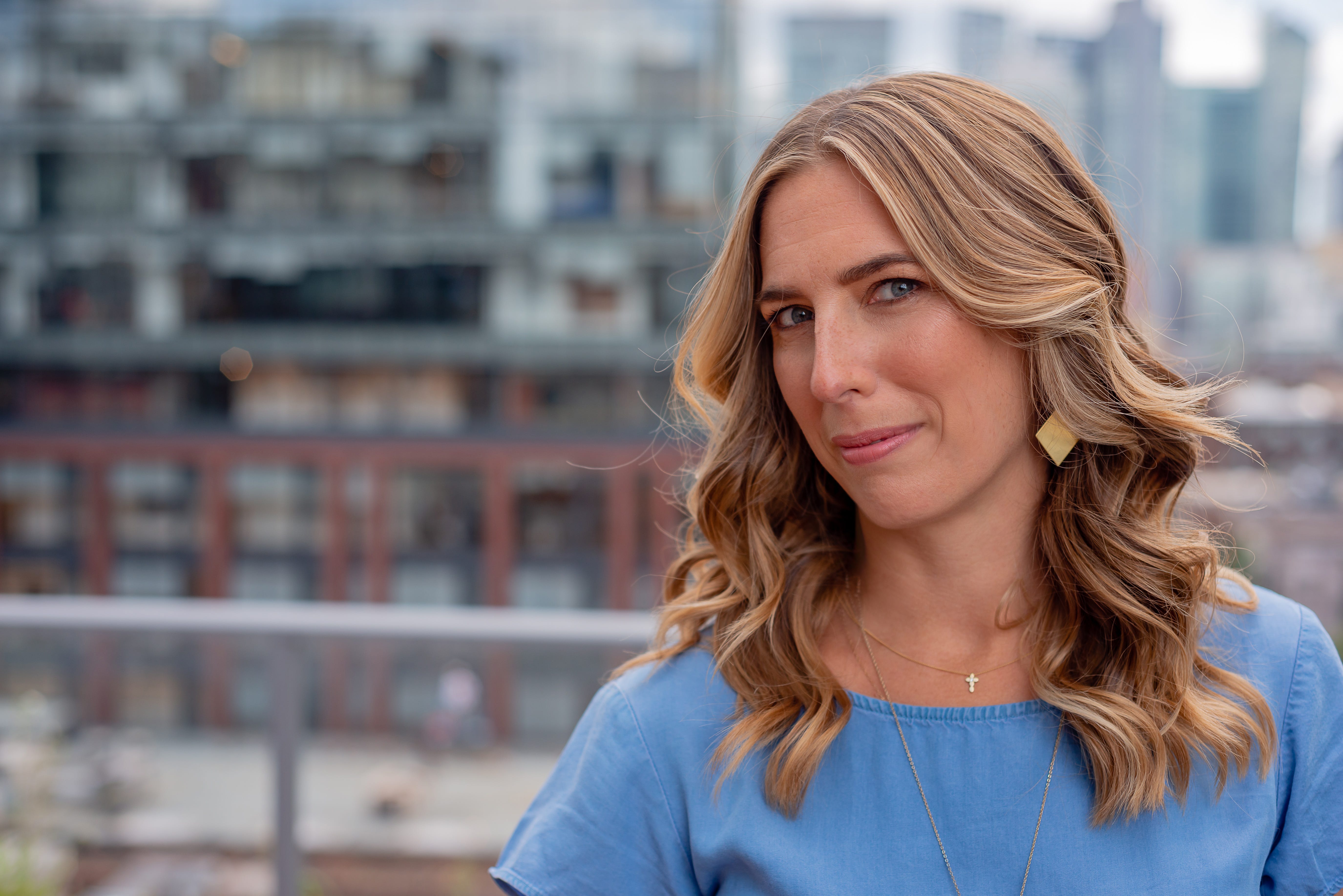
Laura Wieck, LMT, PCC, is a nationally recognized coach, educator, and founder of The ICF Accredited BodyMind Coach Training Program. With over a decade of experience helping practitioners step into more sustainable, fulfilling careers, Laura brings a unique blend of compassion, real-world strategies, and deep industry insight. Her trainings have empowered hundreds of holistic professionals to increase their income, create lasting client transformation, and build practices that support their lives—not the other way around.
